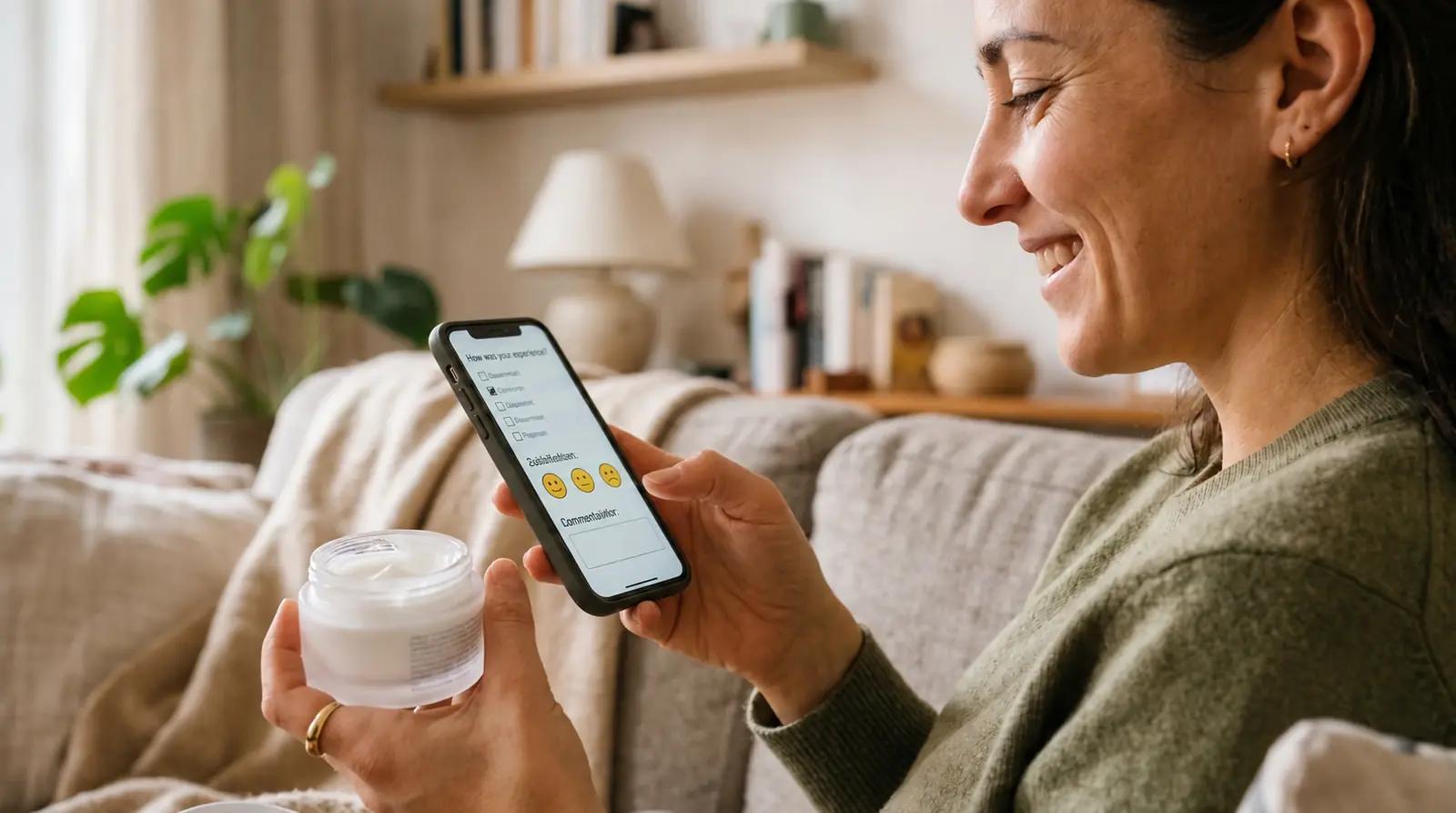
What's missing to understand this discrepancy? Sometimes, just a few lines written spontaneously by users. At SYRES, we pay particular attention to these comments, the verbatim feedback , because it helps us connect the numerical results to the product experience.
A good grade can contain several stories.
Let's take an illustrative example: a face cream receives a satisfaction rating of 8/10 , but a purchase intention of 5/10 . These two indicators describe different dimensions: one can appreciate a product without wanting to buy it.
In our infographic, this comment provides a clue to understanding the situation:
"I really like the texture and the result on my skin, but I find the fragrance too strong. I can't see myself using this cream every day."
The texture and perceived result are appreciated. The fragrance, however, discourages its use on a daily basis.
Without this clarification, a team might try to rework the texture when, for that individual, the difficulty lies elsewhere. The comment helps to pinpoint the obstacle and understand how it influences the judgment.
This example and the accompanying notes illustrate the reading of verbatim transcripts. They are not presented here as study results.
The words specify what an answer covers.
"Pleasant to use" can refer to easy application, quick absorption, or a pleasant moment in the routine. A fragrance that is "too strong" can be bothersome from the first application or become uncomfortable after several uses.
The comments section allows us to explore these nuances. It can also bring to light elements that were not anticipated in the closed-ended questions:
which is precisely what is appealing about the experience;
the irritants or constraints encountered;
the circumstances in which the judgment changes;
the reasons for hesitation in purchasing;
expectations that the product does not yet meet.
This level of detail helps in deciding what to investigate further. It also allows for a better understanding of what users mean by the answers they have selected.
A comment attracts attention; analysis allows us to place it in context.
A very expressive verbatim quote is easily remembered. This does not mean that it represents all users.
At SYRES, we seek to identify recurring comments, compare them with numerical results, and understand their differences according to consumer profiles . The appreciation of a perfume, for example, can vary according to preferences and usage habits.
This cross-reading allows us to distinguish an isolated remark from a recurring theme. It helps us ask the right questions:
Does the obstacle affect several profiles or a particular group?
Is it found among people least willing to buy?
Does it appear from the first use or after several days?
Should we plan for a further evaluation to better understand it?
The challenge is to give each comment its proper place within the overall results.
From listening to product decision
For R&D and marketing teams, the verbatim comments offer concrete avenues for exploration. Depending on the study's findings, they can guide work on texture, fragrance, application method, or the information provided to the user.
They can also reveal the words consumers spontaneously use to describe a benefit . This vocabulary helps to understand what matters to them and to build communication that is closer to their experience. The promises made must then remain consistent with the results and conditions of the evaluation.
The goal is to understand what fosters support, what undermines it, and what warrants further exploration before making a decision. An enthusiastic statement is interesting; a contextualized reading of all the comments is far more useful for taking action.
Behind the results, rediscover the experience
High satisfaction is valuable information. Understanding what explains it, and why it doesn't always translate into purchase intent, allows us to go further.
By combining closed-ended questions and spontaneous comments, we help brands interpret their results more accurately. Users provide their feedback; our job is to analyze it within its context to extract valuable insights.
And it is often in these few lines that we find a lead that we hadn't yet thought of.
Do you want to better understand your customers' experience and the barriers to purchase? Let's talk about your next study.