Stress-free testing: why animal welfare makes pet care studies more reliable
When discussing animal testing, one image often comes up: that of a closed laboratory, an invasive procedure, and an animal suffering. This image does not reflect the usage studies and consumer evaluations that SYRES designs for pet products.
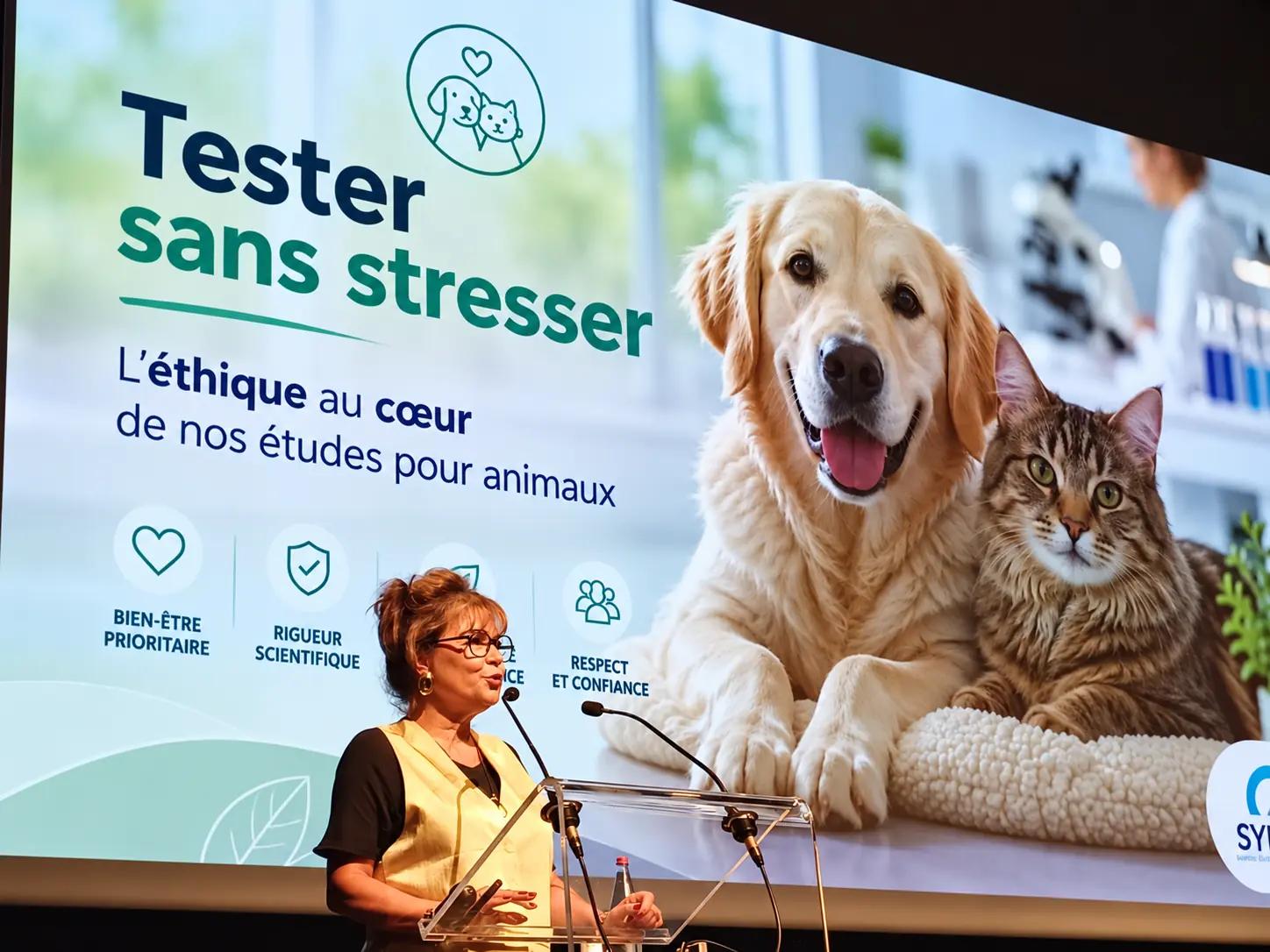
At the CosmoPet International Congress in Saint-Raphaël, Ana De Lemos, CEO of SYRES , dedicated her presentation to this essential distinction. Her topic, "Testing without stress: ethics at the heart of our animal studies," defends a very concrete conviction: animal welfare also improves the scientific quality of the results.
An animal that is anxious, displaced, or confronted with an unusual situation may change its behavior. This variability complicates the interpretation of data. Conversely, an assessment conducted in a familiar setting, with an appropriate protocol and clearly defined stopping criteria, allows for the observation of more natural reactions and the production of more robust conclusions.
Evaluating a product does not mean experimenting on animals.
A pet care study can focus on food, functional treats, dietary supplements, hygiene products, accessories, or services. The goal is to understand how the product actually fits into the household's daily life and how the animal reacts to it.
In the protocols presented by Ana De Lemos, the evaluation is based on several principles:
favour non-invasive methods that are proportionate to the objective of the study;
observe the animal in its usual environment when the protocol allows it;
to gather both the behavior of the animal and the experience of its owner;
establish rules for immediate cessation in case of discomfort, refusal or unusual reaction;
limit the number of animals mobilized through precise recruitment and a well-calibrated methodology.
Rigour is therefore not opposed to ethics. It gives it an operational expression.
Stress can become a methodological bias
In a usage study, behavior is part of the data. Palatability, refusal, ease of intake, consumption time, reaction to an odor or acceptance of a grooming gesture can change if the animal feels insecure.
High stress levels can lead to increased variability, dropouts, or observations that are difficult to interpret. The protocol may then measure the animal's reaction to the study situation rather than its reaction to the product itself.
Reducing constraints, on the other hand, helps stabilize observation conditions. Results become more consistent and more useful for R&D teams, regulatory affairs, and marketing.
Animal welfare is not a moral supplement added to the protocol. It represents a condition of its reliability.
The actual user is a duo
For many pet care products, the experience cannot be understood by simply observing the animal. The owner chooses the product, prepares it, applies it or administers it. They then observe the reactions and decide whether or not to continue the routine.
SYRES therefore studies the duo formed by the animal and its owner.
The animal provides information on the actual acceptability of the product: approach, consumption, refusal, apparent tolerance, comfort, or changes in behavior. The owner, for their part, documents ease of use, integration into daily life, any constraints encountered, and any changes they observe.
Bringing these two perspectives together allows us to distinguish between a product that is simply appreciated by its owner and a product that is truly adopted by the household.
The evidence is built before the test is launched
A good study begins with the claim that the brand wishes to be able to support. "Preferred by dogs," "easy to use," "helps maintain mobility," or "improves coat appearance" do not refer to the same criteria or the same level of evidence.
Before launching a protocol, six questions need to be clarified:
What formulation does the brand want to be able to use?
In which regulatory category does the product fall on the market in question?
Can the proposed method truly demonstrate the promised benefit?
Do the recruitment, duration, and evaluation criteria make the protocol sufficiently robust?
Will the results allow us to use the exact marketing formulation we planned?
Are the constraints imposed on animals still proportionate and justified?
This approach avoids collecting a lot of data that doesn't answer the initial commercial or scientific question. It also reduces the risk of having to repeat a poorly designed study.
Three examples presented at CosmoPet
Ana De Lemos illustrated this approach through several concrete cases from the experience of SYRES.
A kibble designed to encourage chewing
Simply comparing soft kibble to dry kibble wasn't enough. The study needed to determine if a specific texture provided a greater benefit to the animal. Therefore, the protocol incorporated chewing, consumption speed, palatability, any refusals, and observations related to oral hygiene.
The brand could thus link the texture of the product to observable benefits and choose claims consistent with the measurements carried out.
A cleaner for baskets and cushions
For this cleaning product, the owner's feeling of cleanliness was only part of the answer. The study also had to verify that the residual odor, the texture of the bedding, or the residue did not cause rejection by the animal.
Observations were conducted at several points after use, on a variety of textiles and bedding. This monitoring allowed for the evaluation of odor reduction while also verifying the product's compatibility with the animal's daily routine.
A shedding brush evaluated in real life
To measure the actual amount of hair left in the environment, each household used a standardized blanket, which was then collected and weighed. After four weeks, the study measured 74% less hair on the blankets.
This concrete measure went beyond a simple visual impression. It also helped to reposition the product as a complete routine combining hair capture, massage, and controlled application of the treatment.
These examples show that a relevant protocol does not simply ask if the product is appealing. It seeks the measure that most closely reflects the benefit the brand wants to demonstrate.
Better testing to strengthen the entire sector
Pet owners are placing increasing importance on their animals' health, nutrition, and quality of life. At the same time, products are becoming more specialized and claims are more specific. Brands must therefore explain how they achieved their results and under what conditions they evaluated their solutions.
A respectful and well-constructed study offers several benefits:
It reduces the risk of weak or unusable conclusions;
It helps R&D to improve the product before its launch;
she supports claims that are aligned with the results actually observed;
It strengthens the confidence of owners, professionals and brand partners.
As Ana De Lemos summarized to CosmoPet: "Our role is not to test more. Our role is to test better."
Build a pet care study tailored to your product
SYRES assists brands in designing exploratory studies, in-home usage tests, and evaluation protocols tailored to pet care products. Our teams define recruitment, observation conditions, and measurement criteria based on the product, the desired claim, and the target market.
Are you developing a food product, a dietary supplement, a hygiene product, a grooming product or an accessory for animals? Let's talk about your next study.