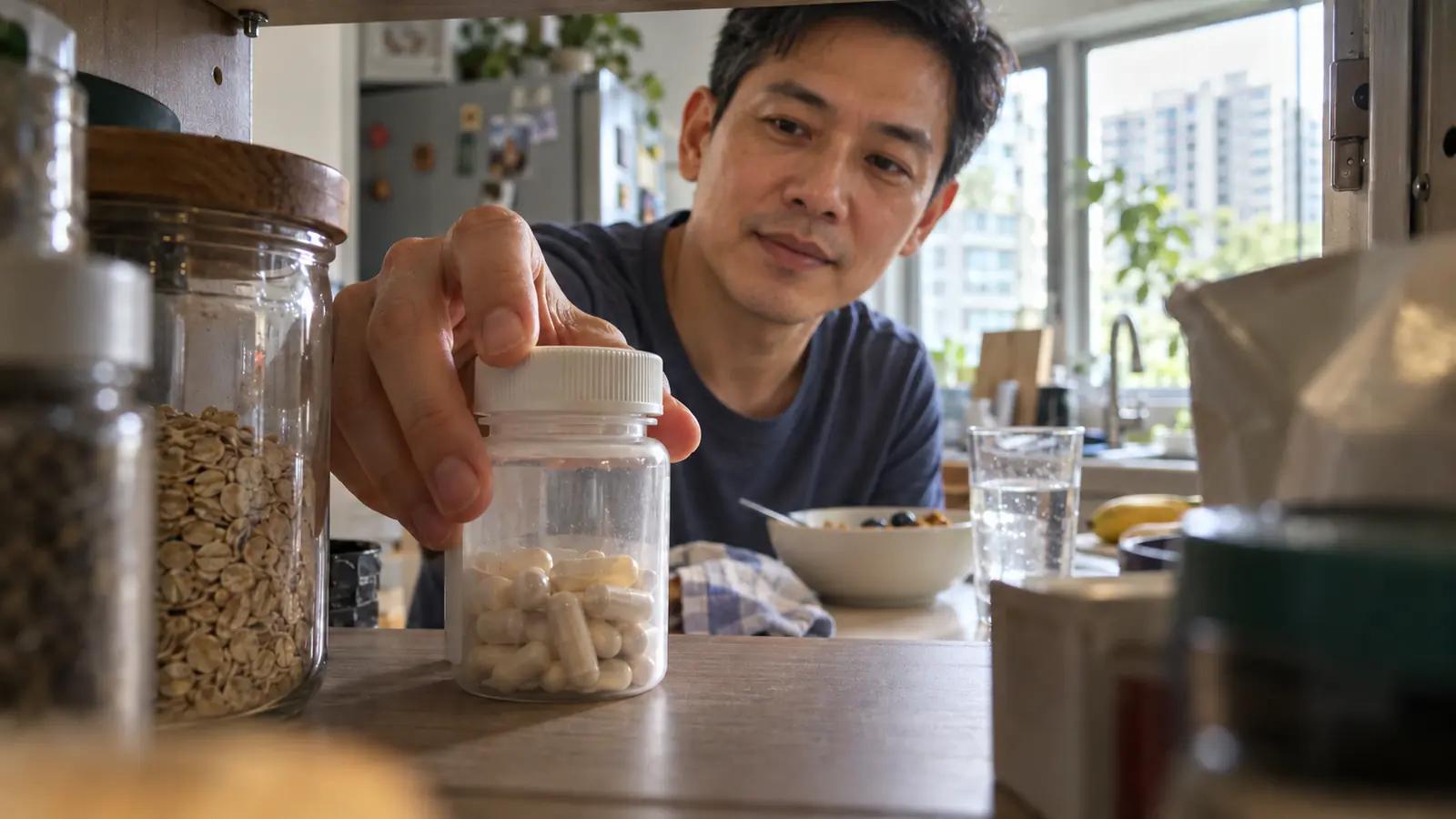
Dietary supplements are already well established in the habits of our panel members in Singapore. But adoption doesn't guarantee loyalty: the benefit must be clear, credible, and noticeable enough to encourage continued use. Our survey provides a better understanding of usage patterns, motivations, and key points of discontinuation.
Key figures
71% currently take supplements, regularly or occasionally.
70% of current users are looking for an improvement in their overall well-being.
60% of former users stopped because they had not noticed any benefits.
31% of non-users fear side effects or interactions.
A category already integrated into daily life
Among the respondents, 71% currently consume dietary supplements. 16% have taken them in the past but no longer use them, while 14% have never consumed them.
For current users, the shopping cart offers several benefits. The most common categories are:
vitamins or minerals: 63% ;
omega-3 or fish oil: 50% ;
products related to digestion, probiotics or prebiotics: 35% ;
multivitamins or general wellness products: 34% ;
bone health products: 26% ;
Skin, hair or nail products: 24%.
This diversity reflects a holistic approach to well-being. Respondents are not just looking for a one-off solution: they readily combine several categories within the same routine.
Well-being and prevention are more motivating than prescriptions.
The three main stated motivations are:
improve general well-being: 70% ;
preventing a future problem: 47% ;
accompanying aging: 43%.
Conversely, only 10% cite a recommendation from a healthcare professional and 10% a dose taken following a diagnosis or assessment.
The customer journey thus appears to be largely driven by the consumer. For brands, this means making the benefit immediately understandable: who is the product for, what progress can one reasonably expect, and how can it be integrated into a realistic routine?
The main risk occurs after the purchase
The most significant lesson concerns former users. Their main reasons for quitting are:
the absence of noticeable benefit: 60% ;
a price deemed too high: 33% ;
sockets forgotten too often: 29%.
Acquisition, therefore, represents only part of the challenge. Loyalty depends on the product's ability to deliver on its promise in everyday life and the ease with which the consumer can maintain their routine.
A longitudinal usage study can document this trajectory: adherence, time to appearance of perceived benefit, moments of disengagement and vocabulary used to describe the changes felt.
Non-users primarily need reference points.
People who have never taken supplements express several forms of uncertainty:
31% fear side effects or interactions;
29% do not know which product to choose;
27% do not see the point;
24% indicate that no professional recommended it to them;
20% say they have never thought about it.
These responses do not indicate a uniform rejection of the category. Rather, they reveal a need for simplification, education, and reassurance. Simply multiplying the number of options is insufficient if consumers do not understand what differentiates the products.
Future expectations remain focused on well-being
Over the next twelve months, the most anticipated benefits are:
general well-being: 36% ;
healthy aging: 33% ;
bone health: 23% ;
immunity: 23% ;
skin, hair or nails: 21% ;
energy or fatigue: 19%.
Prevention and the maintenance of well-being therefore constitute more unifying areas than purely corrective communication.
What brands can learn from this
Three priorities emerge:
Make the benefit observable. Consumers need to know what to look for and within what timeframe.
Facilitating adherence. The format, frequency of intake, and integration into the routine directly influence continuity of use.
Building trust. Clarity of information, security, and relevance of the claim can help consumers make their choice.
Thanks to its presence in Singapore, SYRES can support brands in evaluating concepts, conducting in-home usage tests, and measuring perceived benefits under real-world Asian market conditions.
Are you developing or repositioning a food supplement in Asia? Contact SYRES to build a study tailored to your product, your target audience and your communication objectives.
Discover also what our survey reveals about the uses and expectations of the pet care market in Singapore.
Methodological note: This survey was conducted among members of the SYRES Singapore panel. Percentages are calculated based on the respondents relevant to each question. Multiple-choice questions may exceed 100%. The results describe the survey participants and do not constitute a representative estimate of the entire Singaporean population.